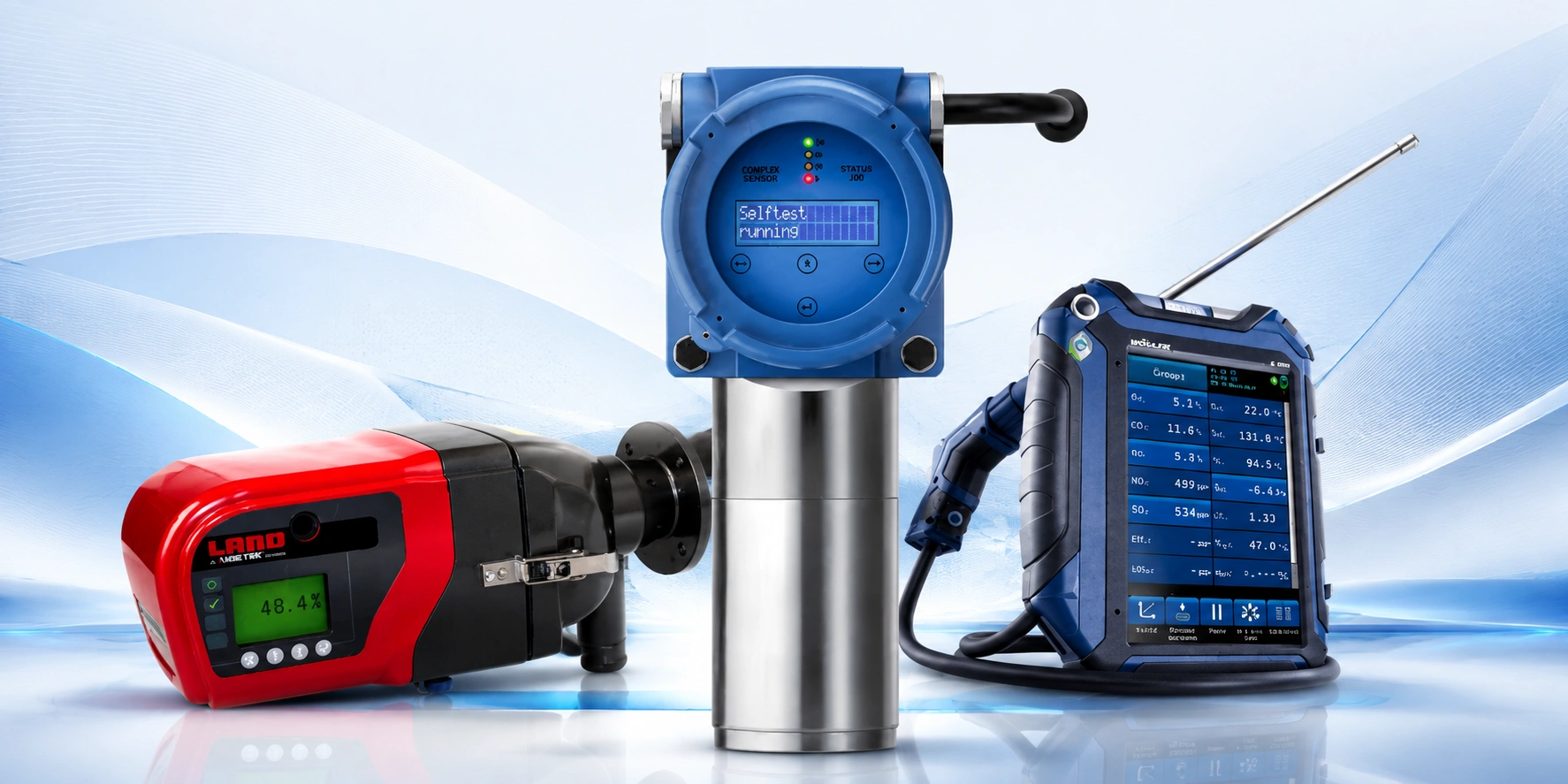
Analytical Instrument
เครื่องมือ Analytical Instrument เป็นอุปกรณ์ที่ใช้สำหรับวิเคราะห์ ตรวจวัด และติดตามค่าต่าง ๆ ภายในกระบวนการผลิต เพื่อช่วยควบคุมคุณภาพของผลิตภัณฑ์ เพิ่มประสิทธิภาพการทำงาน และลดความเสี่ยงที่อาจเกิดขึ้นในระบบอุตสาหกรรม Analytical Instrument สามารถประยุกต์ใช้งานได้ในหลากหลายอุตสาหกรรม เช่น โรงไฟฟ้า อุตสาหกรรมปิโตรเคมี อาหารและเครื่องดื่ม ยา ระบบบำบัดน้ำและน้ำเสีย รวมถึงกระบวนการผลิตที่ต้องการข้อมูลการวัดที่มีความถูกต้องและเชื่อถือได้
Showing 49–72 of 72 results
-
Analytical Instrument
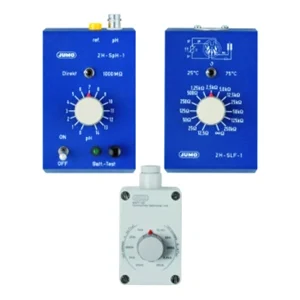
Simulators and calibration adapters
ViewSimulators and calibration adaptersFor pH, redox, and conductivity3 adapters for measuring the pH and redox values as well as the conductivity. Product type 10 can be used to check the operational reliability of technical pH and redox measuring equipment. With type 20 measuring amplifiers and connecting cables for electrolytic conductivity. -
Analytical Instrument
Statox 501 HRC and ARE
ViewDetectors for flammable gasesatalytic sensors detect all flammable substances, but not with the same sensitivity:For small alkane molecules the HRC sensor is best – for instance methane CH4, ethane C2H6, propane C3H8, or n-butane C4H10.The measurement of highly volatile liquids (such as fuels or solvents), the ARE sensor is best.As these sensor heads have no display or relay, they must be operated with the Statox 503 control module. Together they comply with the requirements for functional safety SIL2 level. -
Analytical Instrument
Statox 501 LC IR and MC IR
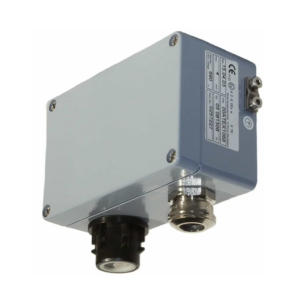
ViewStatox 501 LC IR and MC IREconomical infrared technology for the detection of flammable gases and CO2The Statox 501 IR low-cost family is the cost-effective solution when it comes to measuring flammable gases or monitoring the alarm threshold limit value for CO2 – especially when a catalytic sensor would not do the job.For measurements in the LEL range these infrared measuring heads are a real economical alternative to catalytic sensors. Existing gas warning systems with catalytic sensors can be upgraded to infrared without great effort, as the sensors can be operated with the same voltage as catalytic sensors.Both low-cost models consist of a junction box housing in EEx e design and a sensor in EEx d with integrated electronics.The LC IR is best for Ex measurements, especially for methane. The MC IR is better for all other hydrocarbons.Both infrared measuring heads are connected directly to the Statox 503 Control Module and are ready for immediate use.PRODUCT ATTACHMENTSDATASHEET (LC) | DATASHEET (MC) | MANUALติดต่อขอรายละเอียดหรือสนใจสินค้าLine : @intech2000Email : intech@intech2000.comTel : 02-440-1853 -
Gas Analysis
Statox 501 LC IR and MC IR
ViewEconomical infrared technology for the detection of flammable gases and CO2The Statox 501 IR low-cost family is the cost-effective solution when it comes to measuring flammable gases or monitoring the alarm threshold limit value for CO2 – especially when a catalytic sensor would not do the job.For measurements in the LEL range these infrared measuring heads are a real economical alternative to catalytic sensors. Existing gas warning systems with catalytic sensors can be upgraded to infrared without great effort, as the sensors can be operated with the same voltage as catalytic sensors.Both low-cost models consist of a junction box housing in EEx e design and a sensor in EEx d with integrated electronics.The LC IR is best for Ex measurements, especially for methane. The MC IR is better for all other hydrocarbons.Both infrared measuring heads are connected directly to the Statox 503 Control Module and are ready for immediate use. -
Analytical Instrument
Statox 501 PID
ViewStatox 501 PIDVOC measurement in the ppm or ppb rangePID technology is used for the detection of substances that cannot be detected by other methods. This includes organic solvents and fuels, also known as VOCs (VOCs = volatile organic compounds).The gas molecule to be measured is split inside the PID detector by a very high-energy UV light beam into radicals with an electrical charge. This process is called ionisation. The radicals are discharged at the plates of a capacitor. The resulting discharge current is proportional to the number of molecules and therefore to the concentration.The Statox 501 PID works with a 10.6 eV lamp and can therefore measure all substances that can be ionised with 10.6 eV or less.PID gas analysers are calibrated with isobutene. As other substances are displayed with different sensitivities compared to isobutene, the corresponding calibration factors must be taken from a response table in order to display the concentration correctly. On request, our Statox 501 PID can be ex – works calibrated to your requirements. Then it is ready for use immediately.Similar to the voltage signal of a catalytic sensor, the Statox 501 PID provides a linear output signal that is analysed and displayed by the Statox 503 Control Module. A 4-20 mA analogue output and three powerful relays of the control module forward the measured value and, if necessary, alarm signals to a process control system or peripheral alarm devices.PRODUCT ATTACHMENTSDATASHEET | MANUALติดต่อขอรายละเอียดหรือสนใจสินค้าLine : @intech2000Email : intech@intech2000.comTel : 02-440-1853 -
Analytical Instrument
Statox 501 PID
ViewVOC measurement in the ppm or ppb rangePID technology is used for the detection of substances that cannot be detected by other methods. This includes organic solvents and fuels, also known as VOCs (VOCs = volatile organic compounds).The gas molecule to be measured is split inside the PID detector by a very high-energy UV light beam into radicals with an electrical charge. This process is called ionisation. The radicals are discharged at the plates of a capacitor. The resulting discharge current is proportional to the number of molecules and therefore to the concentration.The Statox 501 PID works with a 10.6 eV lamp and can therefore measure all substances that can be ionised with 10.6 eV or less.PID gas analysers are calibrated with isobutene. As other substances are displayed with different sensitivities compared to isobutene, the corresponding calibration factors must be taken from a response table in order to display the concentration correctly. On request, our Statox 501 PID can be ex – works calibrated to your requirements. Then it is ready for use immediately.Similar to the voltage signal of a catalytic sensor, the Statox 501 PID provides a linear output signal that is analysed and displayed by the Statox 503 Control Module. A 4-20 mA analogue output and three powerful relays of the control module forward the measured value and, if necessary, alarm signals to a process control system or peripheral alarm devices. -
Analytical Instrument
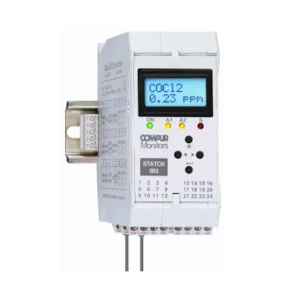
Statox 503 Control Module
ViewIntuitive OperationThe intuitive menu navigation is clear and easy to understand. You can set parameters and perform adjustments or proof tests.Just select the program for the sensor head installed and the measured value will be displayed in the correct unit: ppm, % LEL, or % Vol..In submenus you can set alarm thresholds, program the relay status you want (active or passive), adjust zero, read the bridge voltage and program the analogue output.Installation and removal of the module is simple and convenient. The Statox 503 control module is just clipped onto a power rail (bus adapter). This provides the 24 VDC power supply for all modules and forwards any alarms to the common alarm module.The terminal blocks at the front are pluggable. So you can connect sensor heads or peripheral alarm devices quickly and easily. -
Analytical Instrument
Statox 506 SIL2
Viewdetection of toxic gases and oxygenPure Safety: SIL2 StandardThe standard DIN EN 61508 makes operational safety measurable. This means that every sensor, every small mechanical and electronic component, and every software routine is examined for its probability of failure.These key figures quantify the probability of failure on demand. They are so low in the Statox 506 that they are far below the requirements of the standard DIN EN 50420.Simple operation: Plug & PlayThe measuring head itself is gas-neutral. All technical parameters are stored in the F-RAM of the smart sensor. As soon as the sensor is plugged in, it communicates all important parameters to the sensor (gas type, measuring range, calibration data, date of manufacture, exposure history, etc.) The the system is ready to measure. This new generation of sensors also allows you to check when a calibration or proof test is required.Even changing the sensor is child’s play: snap the sensor into the holder of the measuring head – done. This way, sensors located in places difficult to access, can conveniently be calibrated in the workshop and then be put back into the sensor head on site. -
Analytical Instrument
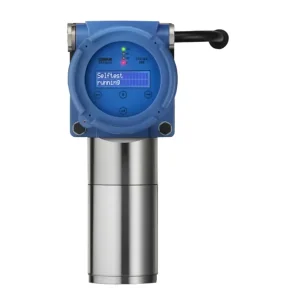
Statox 560
Viewgas detectorThe new generation of sensors provides high sensitivity, very fast response, low cross-sensitivity and plug-and-play technology.The built – in gas generator produces the gas to be measured during the self-test. This way you can always be sure that the sensor is in good condition.The Statox 560 is a 4 – 20 mA transmitter.The entire electronics are housed in an Ex d enclosure with a window. The self-test takes place automatically once a day at a programmable time. However, it can also be triggered manually on site using a magnetic pen. The self-test can also be started from the control room. This is done with a separate button or with the Statox 503 Control Module.A magnetic pen is used to set parameters and read out information such as calibration data, exposure, maintanance request etc. As the housing must not be opened, no hot work permit is required.The sensor module includes the sensor, the generator cell and a micropump. It is designed in protection class Ex i. There is no hot work permit required to work on this module. Another option would be to replace the entire module. This way you can do all work on it in the comfortable environment of your workshop. -
Analytical Instrument
tecLine Br
ViewMeasuring range: 0.05 to 20 mg/lResponse time: approx. 2 minAnalog and digital outputs -
Analytical Instrument
tecLine Ci
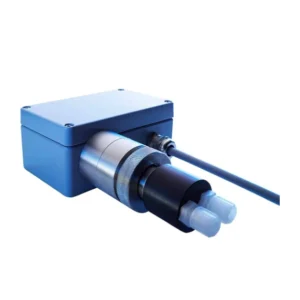
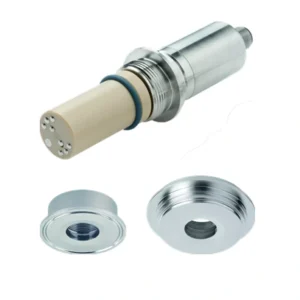
ViewMeasuring range: 0 to 2000 mS/cmSensor material: PEEKMedium temperature: -10 to +125 °C -
Analytical Instrument
tecLine Ci-S
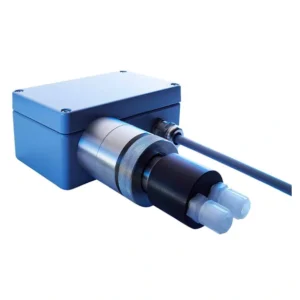
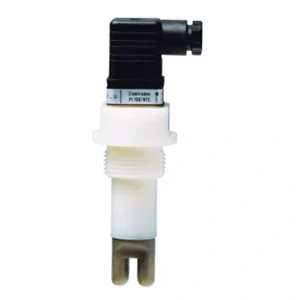
ViewMeasuring range: 0 to 2000 mS/cmSensor material: PVDFMedium temperature: -10 to +125 °C -
Analytical Instrument
tecLine ClO2 and O3
ViewMeasuring range: 0.05 to 20 mg/lResponse time: approx. 15 sAnalog and digital outputs -
Analytical Instrument
tecLine CR
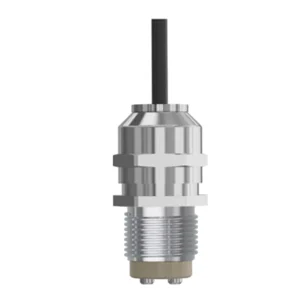
ViewMeasuring range: 0.05 µS/cm to 1 mS/cmProcess pressure up to 16 barCell constant K = 0.01 or 0.1 -
Analytical Instrument
tecLine CR S01
ViewMeasuring range: 0.1 to 5000 µS/cmProcess pressure up to 6 barCell constant: K = 0.1 or 1.0 -
Analytical Instrument
tecLine CR-4P
ViewMeasuring range: 1 µS/cm to 600 mS/cmProcess pressure up to 16 barCell constant K = 0.3 to 0.4 -
Analytical Instrument
tecLine CR-GT
ViewMeasuring range: 10 µS/cm to 15 mS/cmProcess pressure up to 16 barCell constant K = 1.0 -
Analytical Instrument
tecLine H2O2 and PAA
ViewMeasuring range: 0.05 to 200 000 mg/lResponse time: 5 to 10 minAnalog and digital outputs -
Analytical Instrument
tecLine HD
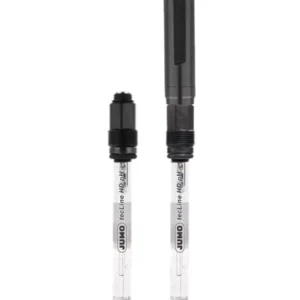
ViewMeasuring range: pH 0 to 14Temperature: 0 to 135 °CProcess pressures up to 13 bar -
Analytical Instrument
tecLine HY
ViewMeasuring range: ± 1500 mVTemperature: 0 to 135 °CProcess pressure up to 6 bar -
Analytical Instrument
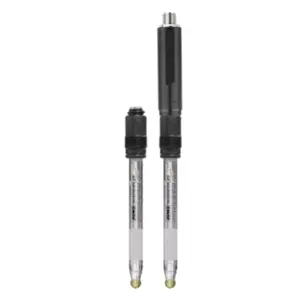
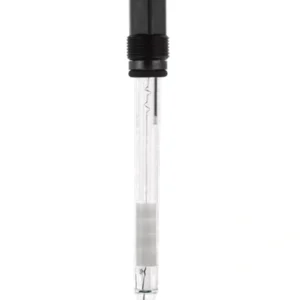
tecLine pH
ViewMeasuring range: pH 0 to 14Temperature: -5 to +135 °CInsertion length: 120 or 225 mm -
Analytical Instrument
tecLine TC
ViewMeasuring range: 0 to 20 mg/lResponse time: approx. 2 minAnalog and digital outputs -
Analytical Instrument
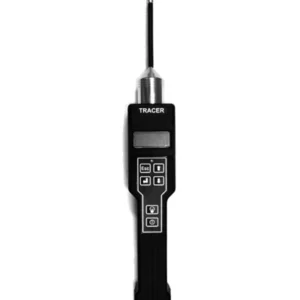
Tracer
ViewThe Compur Tracer is a leak detector for extremely toxic gases. Its electrochemical sensor can detect toxic gases even in the ppb range. Just move the probe along the surface to be checked for leaks. As soon as you approach a leak, the Tracer signalizes the increasing concentration by higher frequency of the audible and visible alarm.The Tracer protects itself from intoxication by too high concentrations. It switches the internal pump off, so that no additional gas can access the sensor as soon as 95 % of measuring range is exceeded. If the concentration drops, it restarts itself automatically.If you need to locate leakages with higher concentration, you can convert the Tracer into the„High – Range“ Version with out tools. Just replace the „Low – Range Sensor“ by a „High – Range“ sensor.The Tracer is not explosion proof. It operates with 4 * AA type batteries. -
Analytical Instrument
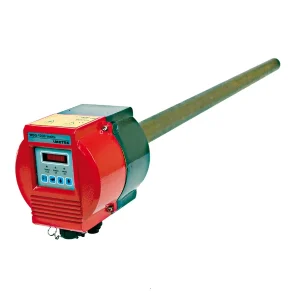
WDG1200 & 1210 (Oxygen)
ViewLand Oxygen monitoringA highly flexible range of high-precision flue gas oxygen analysers developed specifically for combustion analysis and control applications.Using AMETEK’s industry-proven zirconium oxide sensor technology, the WDG-1200/1210 range provides the world’s first fully-integrated, standalone flue gas oxygen analysers. The user interface is mounted onto the probe, lowering installation costs.The unique design allows the sensor assembly to be removed without disturbing the outer protection tube. This means maintenance can be carried out easily on-site, with all parts replaceable in the field, reducing costs and downtime.The WDG-1200/1210 offers local control via the simple user interface attached to the probe, with a remote-control unit available for less accessible locations. Advanced communications options allow straightforward integration into plant control systems.